
- Home
- Religious Cultures and Dharmic Culture – Racism, Freedom of speech, Intolerance and Reservations
Religious Cultures and Dharmic Culture – Racism, Freedom of speech, Intolerance and Reservations
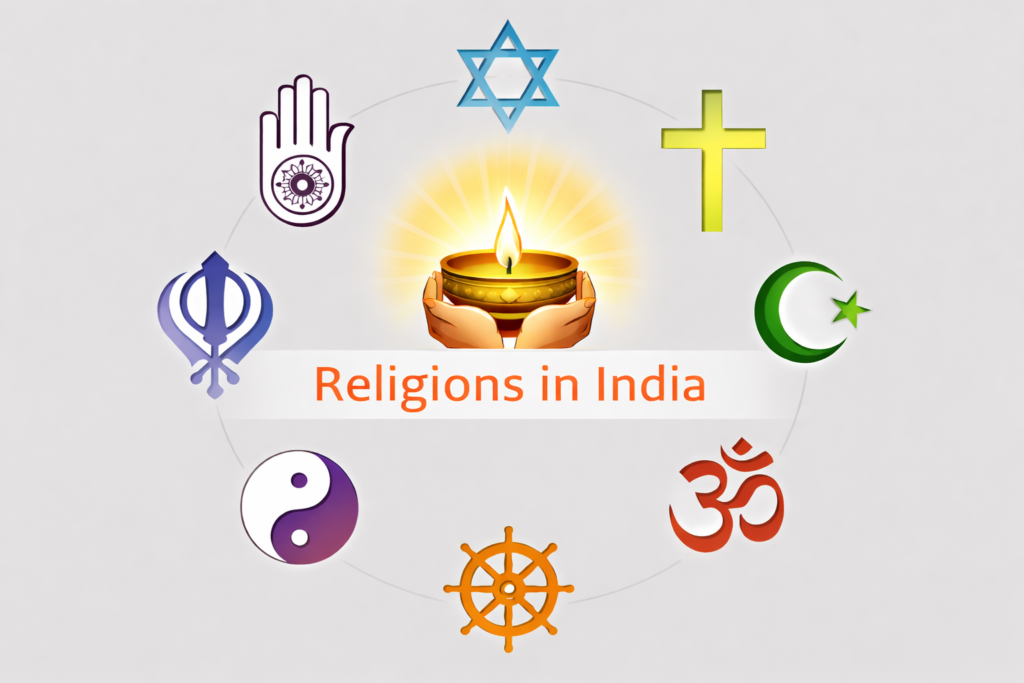
It maybe noted that the first clash between the new militaristic and barbaric Abrahamic culture against the Dharmic civilization that had come from Bharat and set up their temple and township along the old trade route, took place in Armenia in 301 CE, arising from the envy of the success and richness of that society and the rapacity and greed of the invaders. Thereafter, over centuries, the same greed and envy led to millions of other clashes and to the death of many millions all across India/ Bharat, and resulted in great plunder and loot and enslavement of women and children. Yet the Sanatana Dharma endured.
An old poem recognizes the sacrifices of those who fought and died in such clashes and praises them all, saying:
“To everyman on this Earth, death cometh sooner or later. How can a man die better than facing fearful odds, while protecting the civilizational values of his People’s Dharmic Culture, the ashes of his fathers and the temples of his Gods?” – People try to attribute this saying to others who neither cremated their fathers nor had any temples for their Gods, but just seeking recognition by usurping the credit for a very emotive thought.
The closest synonym, to the word ‘Religion’ in any Indian language, is perhaps ‘Dharma’, which is more about duty, obligations, compassion, empathy, ethics and morals, than any rigid belief system. But Dharma has no ‘Founder’ and hence, no ‘Revelation’ and has no organization or leaders or requirements to pay a tithe to any person or organization claiming to represent any God / Lord. It is more a culture based on Natures Laws calling for a sustainable life-style and for attaining to the best for ‘ALL’ Life.
However, even in Sanatana Dharma, donations not necessarily in money, as each deems fit were, are still, made voluntarily to any temple of choice of the donor, but that then becomes the Community’s property and no share of it goes to any hierarchical authority or to any king or priest claiming to represent a God / Lord. Temple wealth in India was always controlled by the Community within which the temple was located. The King and the High Priest and the local community leaders decided how to use the wealth, for public purposes, encouraging the activities of the community, feeding the poor, education of all and community welfare, financing trading and marketing activities etc. Some of how this worked is visible today in the operation of the Gurudwaras of the Sikh community, a branch of the Dharmic culture.
It is such temple wealth and the prosperity of the community that attracted envious, rapacious and greedy invaders. It should be noted that the community is rich only when its Middle class is rich and prosperous. The later colonizers also, sought access to the vast lode of ancient knowledge and also, sought continuous revenue by enforcing high taxation to reduce the community into poverty and then show themselves as the benefactors, especially to those Poor they could induce to convert and to also, prevent any uprising against them. Unable to understand the Varna/Jati, (Position of Responsibility / Trade or work undertaken) system, they mapped their Casta (Right – by way of Birth, from Spain/ Portugal) concept on it and divided the Society by breaking the Varna/Jati system, by teaching that it was only a pernicious and repressive system that victimized the poor, and hence needed to be done away with.
Also, unable to understand the concept of Dharma, they denigrated it and sought to replace it with their religious teachings to bind the people to them.
Dharma, reflects the Golden Rule – ‘Do not demand of, or do unto others, what you do not want them to demand of, or do unto you’.
Dharma calls on each individual to follow the Dharmic, moral and ethical way of living and doing, that is today called ‘Hindutva’. It evolved these eternal / Santana principles through studies into the nature and energies of the Cosmos and of the Laws of Nature and teaches them through stories and parables to allow for better understanding. It enjoins everyone to recognize the validity of the law of action and reaction that says that your acts will determine your karma in this or in a later life, whether you believe in reincarnation or not.
Hindutva asks everyone to strive to reach Heaven on this Earth and in this Life itself by following the Sanatana Dharmic way of living and does not demand any sacrifices now, to reach an unseen and unproven Heaven, that too only after death. If such is the case, then is an early death what is to be aimed for? What then is the purpose of Life?
Dharma, and the culture it expounds, encouraged ‘Seers’ and “Seekers’ to delve into the depths of Nature and the Cosmos and into our inner selves, to logically and rationally strive to find answers to philosophical questions as well as to find ways to make life better for all on Earth, in a sustainable manner. It encouraged a culture of decentralization and the acceptance of many viewpoints only calling for them to rationally and logically be proven.
The knowledge from that Golden Age was taken from India, to the Middle East by traders and those who came to learn and was responsible for the ‘Renaissance’ there. Thereafter, when religious conflict and war and the fear of the religious leaders that such education and development could break their strangle hold on their own followers, caused them to move away from scientific rationality towards religiosity, the Renaissance soon died out in the Middle East.
However, such Renaissance then moved into Europe wherein conflicts and differences in religious matters allowed it space to develop, even if painfully, and give rise to the Industrial Age which allowed them to rapidly advance technologically and militarily and thus begin to colonize the rest of the world.
Book burning, burning libraries, like at Alexandria, and even destroying and burning of the first, and most ancient University in the world, Takshila, all were the acts of Barbarians afraid of knowledge. It is a pity that over-confidence in the respect that people would have for Knowledge and for those who possessed such Knowledge, had led the learned of those times to not understand the mind-set of the barbaric invaders for whom only might was right.
The concept of Sanatana Dharma led to India being a country with a common culture, even if with some diverse practices and customs, from the times of the Rig-Veda (about 60,000 plus years ago), from the Himalayas to the peninsular tip washed by the three seas and was thus easily, geographically and culturally recognized as Bharat or India or Hindustan. The oldest name for this land is Bharat varsha, or the land Raja Bharat, the son of Raja Dushyant and Shakuntala, who had established his sway and spread this culture across the land and thus can be considered the real ‘Father/ Patriarch of the Nation’ that is India/Bharat.