
- Home
- Religious Cultures and Dharmic Culture – Racism, Freedom of speech, Intolerance and Reservations
Religious Cultures and Dharmic Culture – Racism, Freedom of speech, Intolerance and Reservations
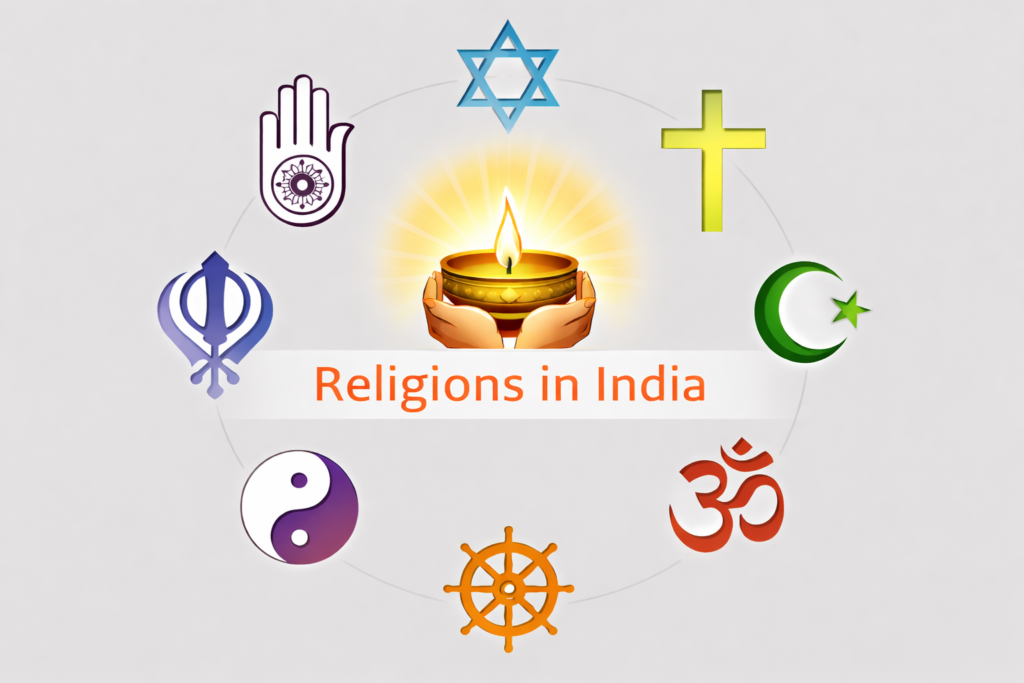
The Differences
A Religion has a Founder / Prophet who, we are told, received ‘Revelation’ from a God or his Angel, that was then written down and compiled into ‘ THE BOOK’, supposedly by his Companions, mostly well after the death of the Founder and remain questionable even if by his alleged actual companions in those times, when few were really literate. Also, most religions have borrowed philosophical ideas extensively from the earlier cultures without attribution, mainly from the oldest, the Dharmic culture and then falsely claim that, as such ideas are common, hence, all religions are just different paths to the same destination, even as they deny the validity of the paths of the cultures and beliefs of the others. Also, as religious cultures begin from a specific start date their followers consider their ancestors from earlier times as Pagans and hence, not worthy of respect or reverence, while in the Dharmic culture respect, regard, reverence and even worship of Ancestors is encouraged.
The Dharmic culture sees itself as arising from a rational understanding of the Eternal Laws of the Cosmos and Nature and hence, sees itself too as eternal – ‘Sanatana Dharma’ and an integral part of Nature. Sanatana Dharma is based on evidence-based concepts and is hence, really scientific. The Rishis and Seekers of those days were really who we today, would recognize as Scientists and Philosophers.
Also, Religious Cultures are Purely belief based, ‘Authoritative’ and ‘Declarative’ – ‘This is what is, and most times even ‘Imperative’ – ‘Thou Shall, or Thou Shall Not’. The ‘Book’ lays down the ‘Commandments’ and the ‘Rules’ that must be strictly adhered to and followed, as duly interpreted by those claiming to be the representatives of the Founder and hence, the rightful leaders of his followers. The followers are bound to the Religion by the unverifiable and not to be questioned promise made by such leaders, of ‘Salvation’, after Death or by the fear of punishment for not following the directives of the leaders, even of ‘Eternal Damnation’, again after Death, the contradiction in the concept of an All loving and All forgiving/ All merciful God decreeing eternal punishment is not to be questioned. This then raises the question that if ‘Salvation’ comes only after death – what then is the purpose of Life? The contradiction in the very first Commandment, Saying- ‘I am the Lord your God, and you will have no other Gods before me,‘ itself implies that there are other Gods, but this too is not to be questioned.
Each of the followers of a Religion, is required to pay a tithe of about 10 percent of their earnings / revenues, either directly or indirectly, to such leaders, over the use or disbursal of which they have little or no say. Similar to what we see today in commerce as a direct pyramidal marketing system, where those at the top of the pyramid get very wealthy and even powerful.
History tells us that a religion, so organized, is not only the greatest financial scam on its followers but also, a great divisive force between ‘US’, (the followers) and ‘THEM’, (the others) and the single largest cause, by far, of torture, murder, loot and destruction (wars, crusades, inquisitions and conquests) all over the world as it calls on its followers to take from the others and share such loot in an 80 / 20 percent or so, with them and also, to convert them to their religion, even if by the sword. It is thus no wonder that the Catholic Church, with the over 2000 years of such collections is by far the richest organization in the world.
History shows us that each and every country, into which such religions had entered as invaders/conquerors, had been converted totally to that religion within 11 to 25 years and a new authoritative religious culture established. Of course, a few of them were later re-conquered by invaders following the earlier or another religion and the country once again forced to change its religion. This return to the earlier or new religion then generally took less than 7 years.
The only exception being India, wherein even after 800 years of Islamic invasions and rule and subsequently over 200 years of Christian rule, the Country continued to be largely adhering to its ancient Sanatana Dharmic Culture, in accordance with the Eternal (Sanatana) energies of the Cosmos and Laws of Nature and based on the principles of ethics, morality, duty and empathy as discovered by the ancient Seers and Seekers. The invaders were not all conquering as they were strongly resisted by the many Kings and even many ordinary people following the Dharmic culture, as the new religious cultures could not stand the ‘Interrogative’ nature of the Dharmic culture. Perhaps the fact that the Dharmic Culture was a well distributed culture with no recognized central religious leaders had not allowed the culture to collapse even as many were killed.
I fully agree with your views on Dharma; Good collection…
Thanks. Please share widely.