
- Home
- Interse Currency Valuation & Monetizing Personal & Temple Gold & Silver Holdings
Interse Currency Valuation & Monetizing Personal & Temple Gold & Silver Holdings
Action Points
- Equitable valuation of the effort and resources invested in the products or services being traded.
- Gold holding – Monetization of –
It is estimated that India holds over 100 thousand tons of Gold or more in jewellery etc. held by its citizens, its temples and by its Banks (against Gold Loans). Though officially it is said to be only 11 percent of the World’s total Gold. Even this amount is greater than the combined central bank reserves of the U.S., Switzerland, Germany, and the International Monetary Fund. Like stagnant water in a pond, such wealth will not generate any benefits. We should monetize at least 50 percent of such gold holdings and release equivalent currency into circulation in a steady manner, so as not to spur inflation, but to encourage investment in Infrastructure Ofcourse, Temple Gold will have a greater value as an antique artifact than the just the Gold value, such gold artifacts, coins and ornaments can, if possible, be displayed in Museums to generate additional income as ticket money to cover the security and display costs and more, and also to have the intangible, but invaluable, effect of inducing pride in the citizens, about their history and the craftsmanship of their ancestors.In case of any serious emergency when we may need to actually produce the gold, we can go to our citizens, especially the women folk, as much of such gold is held by them (Stree Dhan), to donate, or loan the gold to the Government against gold bonds as they deem fit. They would recognize that the value of their gold would only be fully realized when their Country is stable and strong and they will, hence, have no hesitation to participate in keeping the Country so. This was proved by the response to calls by Netaji Subhash Chandra Bose and by Prime Minister Lal Bahadur Shastri in 1943-44 and 1965 respectively.
The RBI initially rejected this idea, saying that no Country in the world does this. But when it was pointed out to it that no other Country in the world held Gold like this and that many Western Governments had issued currency against what was later accepted as overstated reserves of valuable assets even other than gold, the RBI too soon changed its mind and is now proceeding with monetizing some of such gold holdings, with the approval of the IMF. Clearly recognizing that the gold and silver holdings of its citizens are also the wealth of the Country, like are the other assets and resources.
Also, import of Gold should be allowed freely at say one percent tax, and domestic sale of Jewellery also, be at five/six percent, however, export of gold should be allowed only as value-added products (jewellery etc.) and be taxed at 10/12 percent as deemed fit. This will lead to more gold holdings within our Country and will also eliminate smuggling and the ills associated with it.
- Ofcourse, Silver is also a traditional measure of wealth and its vast holding in India by its citizens (estimated as nearly 40 percent of the world’s holding) can also be monetized on similar lines as for Gold.
- Using Blockchain methodology and establishing a ‘Stable’ digital Currency for transactions within the Country and linking/ tethering it to a Universally accepted Crypto- currency acceptable to the other countries, using an appropriate algorithm to adjust for the factors given above may be the way.
- Finding a way to monetize embedded value of water in agricultural product being exported. If oil can be resold as per market demand and not on actual costs plus profit, then why not agricultural products. Barter/Exchange of the produce of their country (Oil) with that of ours, may be a better way. Ofcourse, if barter is not acceptable or possible, then we should insist on the other countries investing in India, in Irrigation and water works, Infrastructure for ‘Farm to Fork’ facilities and even in Agro-Research, in a meaningful way, as some sort of balancing value. Also, for them to enter into long term produce delivery contracts with the Farmer Corporations, benefitting from such projects. Ofcourse, any dividend that such investors may receive will make such schemes more attractive and acceptable.
Conclusion
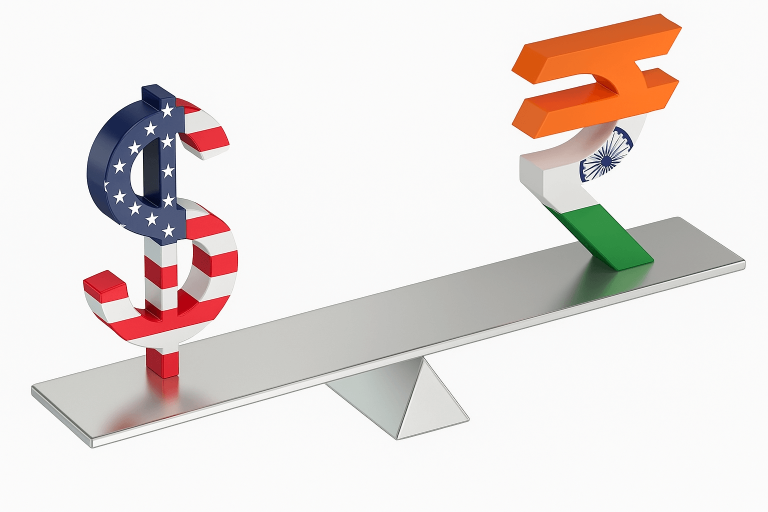
The value of a country’s currency has to be, equitably and in a transparent manner, assessed against that of the other country’s currency to enable trust and a level playing field when dealing with each other. There should be stability in the valuation of the respective currencies, tethered to measurable factors as given above, using Blockchain methodology. Otherwise, Trade imbalances and manipulation in currency valuations end up distorting the exchange system.
JAI BHARAT! – JAI HIND!