
- Home
- Varna, Caste / Jati & Untouchability
Varna, Caste / Jati & Untouchability
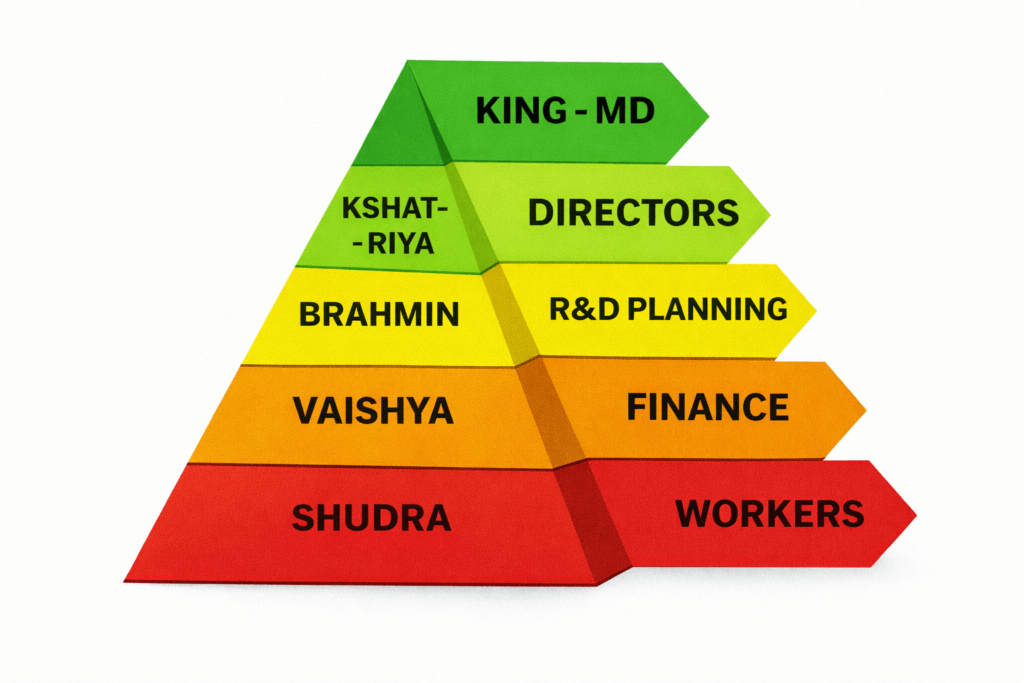
We also, see evidence of great ecological specialization, for mammals living in trees and on the ground that are active at day versus at night. The term ‘guild’ is used in ecology much as it is used in human society, to describe a collection of individuals who make a living in the same way. Human examples include cobblers, brewers, blacksmiths, carpenters and goldsmiths.
Ecosystems are vital to the survival of all living things, including us humans. In fact, any break in this natural and balanced network of living things interacting with their environment can cause irreparable damage to all other members of the network.
Let us now consider the distribution of Life, both animal / insect life and what Rules they seem to be required to follow to live together packed as densely as they are in the canopy of the Equatorial Forest.
Each layer contains niches for specific types of plant, animal, and insect life that make the best of the opportunity for food and security in that niche. They live off water that pools in the leaves or depressions in the branches or directly from the daily rainfall, and whatever food is available at that level. Each layer or niche has a clear boundary or frontier zone and the life therein is constrained to remain within it. If by happenstance any creature transgresses that boundary or zone and enters into another, thus threatening the opportunities to other life there, it then may be subject to aggression from the inhabitants of that layer or niche that drives it back into its own layer or niche or even result in its death. Creatures that slip or fall to the ground or into a lower layer must strive to get back into their own layer or niche speedily, otherwise again they may be subject to aggression.
Nothing forces the life in each layer or niche to live in any particular layer or niche, only the innate ability to best live symbiotically with other life there and to best avail of the food sources there and to take advantage of the security provided by the inaccessibility of such niches to most predators. Smaller and lighter monkeys live where the branches would not support the weight of heavier monkeys or predators. Each creature or plant proliferates best in its niche. Such practical adaptability allows for very dense populations across and all over the Canopy.
Inter species competition results from a high density of species with similar needs and limited resource availability. Direct competition will often lead to one species dominating another due to some advantage, ultimately driving the other out of existence. Niche partitioning is a practical option for a species. This is the separation and rationing of necessary resources by utilizing different habitats, food sources, cover or general behavioural difference. A species with similar food items but different feeding times, one at night and the other during day time, is an example of niche partitioning.
Competitive species use the environment differently in a way that helps them to co-exist. Species can differentiate their niches in many ways, such as by consuming different foods or same foods at different times or using different parts of the environment or habitat.
A Community is a ‘Set’ of all populations that inhabit a certain area. Communities can hence, have different sizes and boundaries. There are only a few dominant species in any community and resource partitioning is perhaps the reason for this.
Staying within its own layer and living therein, following the rules of its own kind, is the only way to live as safely as possible and proliferate within densely populated areas with limited resources.
Such limitations, and the commonly followed rules to determine transgressions as acceptable or not, allow for a great density of life in the forest. This evidently proves that such restrictions and acceptable rules are in accordance with Nature’s Laws.