
- Home
- EFFECTS OF MILK
EFFECTS OF MILK

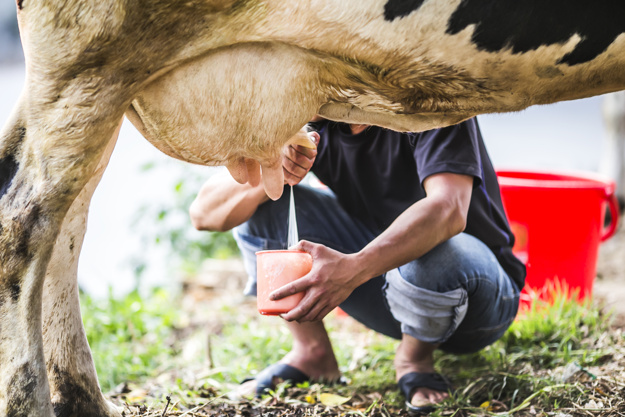
Milk of Indian cow breeds is considered more beneficial than that from foreign cow breeds, as it contains the amino-acid proline which is strongly bonded to another aminoacid isoleucine and to the right proteins.
Switching consumption from A1 to A2 milk has been noted to lead to significant improvement in a host of health issues. With rising awareness, the demand for A2 milk has gone up phenomenally in countries like Australia, UK, New Zealand, across Europe and even in USA.
Human milk contains A-2 proteins and a large variety of oligosaccharides, (prebiotics), with the potential to modulate the gut microflora, to affect different gastrointestinal activities and to influence inflammatory processes. The amount of oligosaccharides in milk of most animal species is far lower and significant differences are noted about those in the milk of various farm animals.
Plant based prebiotic oligosaccharides are structurally different from human or animal based ones and till more research is done such oligosaccharides should preferably not be used as supplements in infant feed formulas.
Consumption of Milk with other foods:
Milk can be taken with very starchy foods, even bananas. But it is better taken by itself as it is a gastric insulator, inhibiting the release of gastric juices for some time. Milk does not digest in the stomach, but in the duodenum and hence does not trigger the secretion of digestive enzymes in the stomach.
Kefir:
Kefir is a cultured, creamy product with amazing health attributes. It contains beneficial yeast and friendly ‘probiotic’ bacteria found in yoghurt. It is loaded with vitamins and minerals and contains easily digestible complete proteins. For the lactose intolerant, kefir’s abundance of beneficial yeast and bacteria provide lactase, an enzyme which consumes most of the lactose left after the culturing process.
Kefir can be made from any type of milk, cow, goat or sheep, coconut, rice or soy. Although it is slightly mucous forming, the mucous has a “clean” quality to it that creates ideal conditions in the digestive tract for the colonization of friendly bacteria.
Kefir is made from gelatinous white or yellow particles called “grains” formed in milk culture. This makes kefir unique, as no other milk culture forms grains. These grains contain the bacteria/ yeast mixture clumped together with casein (milk proteins) and complex sugars. They look like pieces of coral or small clumps of cauliflower and range from the size of a grain of wheat to that of a hazelnut. Some of the grains have been known to grow in large flat sheets that can be big enough to cover your hand!. The grains ferment the milk, incorporating their friendly organisms to create the cultured product. The grains are then removed with a strainer before consumption of the kefir and added to a new batch of milk.