
- Home
- Lands / Rights – Acquisition & Compensation there for
Lands / Rights – Acquisition & Compensation there for
To believe that the Tribals / Adivasis are, only by virtue of living therein for generations, the best conservators of the Forest / Environment is to not know the history of others like them, of the Easter Islanders, Anasazi’s etc. (refer “Collapse” by Jared Diamond). We should keep in mind that such people may be ignorant of modern life, but that they are quite capable of understanding the options, if properly informed about them, and making the choice best for them. They, and their culture, are not museum exhibits and no outsider or NGO should arrogate to himself the right to choose for them.
To think that they would continue to prefer to live as they do now, or asking them to choose without being able to make an informed choice, is again to not learn from history. (Eskimos and Papua New Guineans who went from the ‘Stone Age to the Jet Age’ in one generation in the 1950-60’s and the ‘Bushmen / Khoisan’, the aboriginal Hunter gatherers of South Africa, and the ‘Orang Asli’, the aboriginals in the primary forest of Malaysia – all more Ancient than most of our Adivasis / Tribals who are mainly those who have, in order to escape persecution, reverted back to forest living in the secondary or tertiary forests of lndia). People, even Adivasis / Tribals, need to have a population density high enough to sustain their culture. Declining isolated populations soon lose all their complex skills and regress into subsistence survival. This cannot be their choice. All such isolated aboriginal populations, once given the option of an informed choice in modern times, have chosen to share in the benefits of the Civilization around them while still trying to retain some cultural customs and identity, though in more practical and modified forms.
Blind admiration for our past, prevents us from noting the extensive deforestation and environmental degradation across much of our Country by our ancestors, leaving most of it as scrub land, nor about the environmental damage caused by mining of Gold (Kolar), Coal, Iron and Clay (brick making) etc. in so many ancient locations.
We today should consider ourselves fortunate that we are aware of the nature and extent of the harm such ‘Extractive Industries’ can do our environment and, to the peoples and animals living therein, and have at our disposal the skills and technologies for being able to greatly mitigate it all, both during and after the extraction / beneficiation process. It is noted worldwide that environmental issues receive due attention only when the per capita income levels exceed 1990’s US $4000/- per annum. So perhaps it would be more realistic for us to first seek to attain to such levels, of course with the least environmental ill effects as realistically practicable, before calling for restrictions on resource utilization. Also, to learn from the past and trust technological progress, to constantly bring about better ways to do so in future as it has always done in the past.
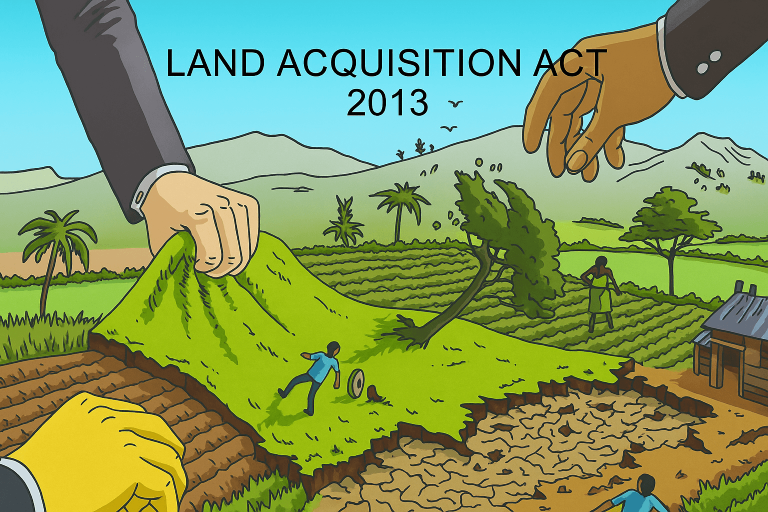
Today it is more important for us to work out and apply more equitable methods of compensation.Just the announcement of a proposed Project or Venture or the making of a road there will lead to assumptions of greater value for the land to be acquired. Continuous development thereafter leads to envy and a feeling of having been cheated out of a share in the value of such development, even if compensation had been given as per the initial value, say what it was six months before the announcement of the scheme. This would greatly negate speculation based on information.